FREE Roof Repair Estimates
Understand likely costs, then connect with trusted local roofing contractors.
Roof Repair Estimate Calculator
Answer a few questions to understand likely roof repair costs and request free local contractor estimates.
This roof repair cost estimator is an AI powered free roof repair estimates tool. It relies on the homeowner providing accurate input information and is based on limited information provided to the free estimate for roof repair calculator and is subject to our policies.
How to Evaluate Roof Repair Estimates: Line Items, Real Costs, and Scope Verification
A written roof repair estimate provided by your local roofer where indicated may be used as a legally binding line-item breakdown detailing the material, labor, permits, and scope required to restore a roofing system to code compliance. Evaluating roof repair estimates requires verifying physical job-site scope against actual roof conditions—ensuring underlying components like step flashing, self-adhering ice-and-water shield, and structural decking are explicitly covered rather than hidden in lowball contractor bids.
Get Your Roof Repair Estimate

Core Problem & Diagnostics Tips
A written bid often fails to reflect true restoration costs because surface-level symptoms rarely match the full extent of subsurface moisture damage. A superficial visual check from the driveway ignores how water migrates along rafters, synthetic underlayment, and roof decking before manifesting as an interior ceiling stain. Obtaining accurate roof repair estimates requires a systematic diagnostic evaluation before any agreement is signed.
[ROOF SURFACE]
|
v (Water bypasses cracked shingle or failed seal)
[UNDERLAYMENT]
|
v (Saturates felt/synthetic substrate)
[STRUCTURAL DECKING]
|
v (Rots plywood/OSB sheathing; rusts fasteners)
[RAFTERS & ATTIC]
|
v (Runs along framing timber)
[INTERIOR CEILING/WALL] <– Spot where leak appears (often feet away)
Pre-Estimate Diagnostic Checklist
- Attic & Interior Substrate Inspection (Perform First)
- Rafter & Sheathing Staining: Look for dark streaks, white efflorescence, or delamination on plywood/OSB decking using a high-lumen flashlight.
- Insulation Moisture: Check for compacted or wet fiberglass batts, which indicate chronic, slow leaks and thermal bridging.
- Penetration Points: Inspect the underside of plumbing stack boots, exhaust vents, and chimney crickets for rusted nails or daylight showing through.
- Exterior Roof Decking & Surface Inspection (Safety Harness Required)
- Shingle & Surface Integrity: Identify cracked, curled, or missing asphalt shingles, as well as granular loss accumulating in gutter troughs.
- Flashing & Interface Conditions: Inspect wall-to-roof transitions for loose, unsealed, or rusted step flashing and wall counter-flashing.
- Eaves & Valleys: Check valleys for cracked roll roofing or damaged metal liners, and inspect drip edges for improper water shed.
Homeowners seeking a free estimate for roof repair must ensure the inspecting contractor physically climbs onto the deck and accesses the attic. An inspection conducted entirely from the ground using binoculars will yield a quote that overlooks hidden decking rot, guaranteeing mid-project price escalations. When utilizing a digital roof repair cost estimator or reviewing contractor proposals, demand that the inspector documents leak paths with thermal imaging or moisture meter readings.
Section 2: Comprehensive Breakdown of a Contractor Estimate
Understanding a professional bid requires breaking down the essential line items every licensed contractor must include to satisfy National Roofing Contractors Association (NRCA) guidelines and International Residential Code (IRC) standards.
+-------------------------------------------------------------------+
|                  COMPREHENSIVE LINE-ITEM BID                      |
+-------------------------------------------------------------------+
|  1. SCOPE & TEAR-OFF                                              |
|     - Localized tear-off down to structural deck                  |
|     - Debris removal & magnetic yard sweep                        |
+-------------------------------------------------------------------+
|  2. MATERIALS & QUANTITIES                                        |
|     - Architectural Shingles (Class 4 Impact)                     |
|     - Synthetic Underlayment + Ice-and-Water Shield               |
|     - 26-Gauge Galvanized Drip Edge & Step Flashing               |
+-------------------------------------------------------------------+
|  3. LABOR, PERMITS & CODE COMPLIANCE                              |
|     - Itemized labor hours / Square rate ($50-$75/hr benchmark)   |
|     - Municipal building permit fees                              |
+-------------------------------------------------------------------+
|  4. WARRANTY COVERAGE                                             |
|     - Material Defect Warranty (Manufacturer)                     |
|     - Workmanship Warranty (Contractor Execution)                 |
+-------------------------------------------------------------------+
Roof Repair Estimate Line-Item Breakdown & Material Checklist
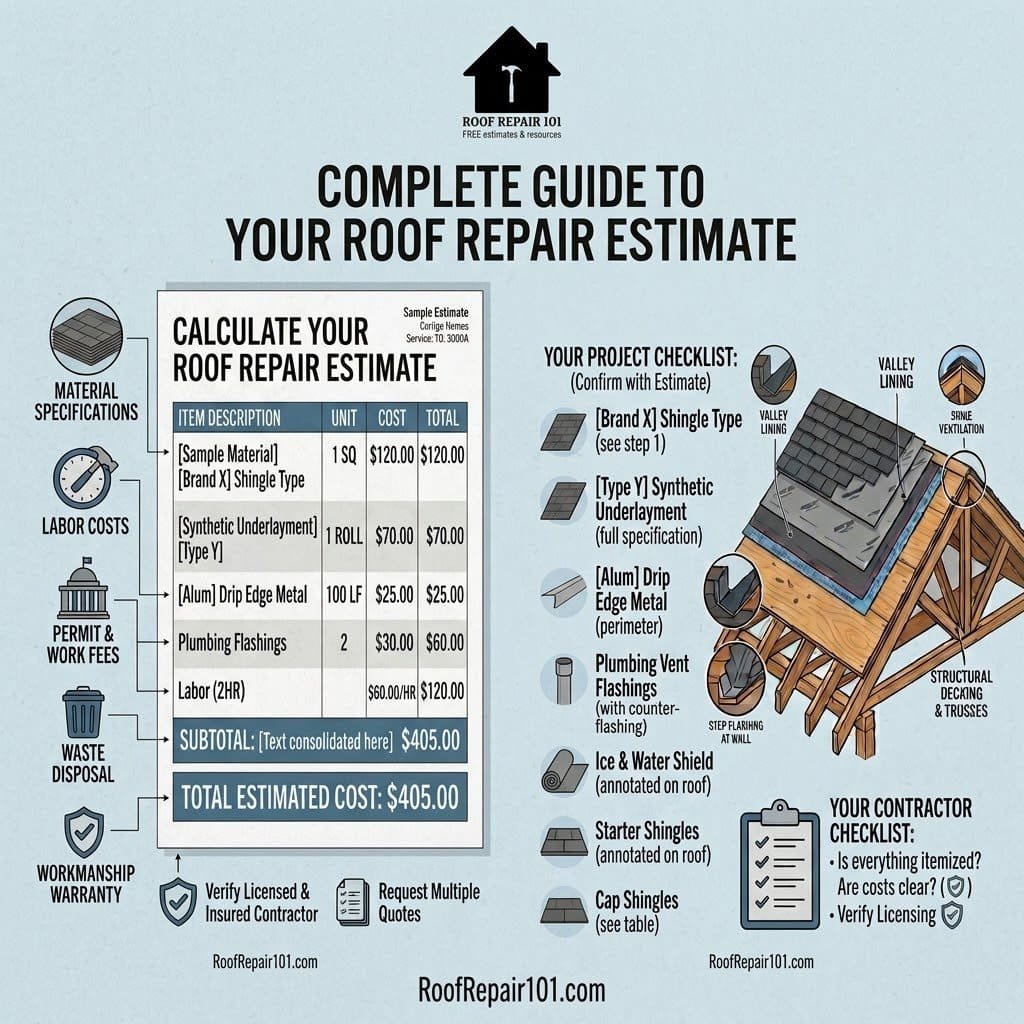
How to Use This Roof Repair Estimate Checklist
Evaluating a roofing quote requires verifying that every line item matches the physical reality on your roof deck. Use this visual guide in tandem with your written contractor proposals to ensure complete scope transparency before signing a contract.
1. Cross-Reference the Sample Estimate Line Items
When reviewing a quote, confirm that it explicitly breaks down costs into distinct categories rather than listing a single lump sum:
- Material Specifications: Verify that specific brands, quantities (measured in roofing squares or linear feet), and material grades are listed for shingles, underlayment, and drip edges.
- Itemized Labor Hours: Ensure labor rates are clearly defined. Labor typically accounts for 50% to 60% of total repair costs.
- Permit & Waste Fees: Confirm that local municipal building permits and tear-off debris disposal fees are included upfront to avoid surprise mid-project charges.
2. Audit the Physical Roof Components
Use the anatomical diagram on the right side of the guide to check if your contractor addressed key water-shedding points:
- Underlayment & Ice/Water Shield: Ensure self-adhering membranes are specified for eaves, valleys, and wall intersections.
- Flashing Integrity: Verify that step flashing around walls and plumbing vent collars are scheduled for full replacement rather than temporary caulking.
- Ventilation & Decking: Check that structural plywood or OSB deck repairs are addressed if moisture penetration has occurred.
3. Complete Your Final Contractor Vetting
Before approving any estimate, verify the following three mandatory protection criteria:
- Licensing & Insurance: Require proof of active general liability insurance and current state/local roofing contractor licensing.
- Written Workmanship Warranty: Confirm the bid separates the manufacturer’s material warranty from the contractor’s installation execution coverage.
- Multi-Quote Benchmark: Compare at least three itemized bids using the same material specifications to establish a fair market baseline.
Why Line-Item Transparency Matters for Homeowners
Vague roofing quotes are a primary cause of mid-job cost overruns and early leak failures. A lowball estimate often achieves its low price by skipping critical underlayment replacement, reusing corroded step flashing, or omitting municipal permit costs.
Insisting on an itemized roof repair estimate protects your property and investment. It ensures the work complies with International Residential Code (IRC) standards, holds the contractor accountable to established National Roofing Contractors Association (NRCA) practices, and provides the written documentation required for future home sales or property insurance claims.
Core Line Items in Standard Roof Repair Proposal
- Scope of Work & Tear-Off Requirements
- Specifies whether the job involves a spot repair or a localized tear-off down to the structural deck.
- Details waste disposal, dumpster fees, and site cleanup protocols (magnetic sweeps for stray nails).
- Material Specifications & Quantities
- Exact brand, line, and color of replacement shingles or roofing membrane.
- Type and gauge of underlayment (e.g., synthetic felt vs. self-adhering ice-and-water shield).
- Metal flashing specs (galvanized steel, aluminum, or copper) and ridge ventilation lengths.
- Labor, Workmanship & Permit Fees
- Itemized labor hours or flat-rate square installation rates (labor typically accounts for 50–60% of overall project totals).
- Municipal permit acquisition costs to satisfy local building code compliance.
- Warranty Coverage
- Manufacturer warranties (material defects) vs. Contractor Workmanship Warranties (installation execution).
Homeowners comparing multiple free roof repair estimates should verify that every contractor measures using standardized “squares” (1 square = 100 sq. ft.) rather than vague visual guesses. When asking contractors what is the estimated cost of a roof repair, ensure the bid includes dedicated line items for flashing integration and underlayment replacement rather than generic bulk rates.
Roof Repair Cost Estimate, Trade-Offs Decision Matrix
Evaluating line items requires weighing short-term repair fixes against long-term roof replacement realities. The matrix below outlines common scopes of work, structural trade-offs, and recommended protocols.
| Repair Scope / Component | Structural Trade-Offs & Risk Profile | Contractor Protocol & Code Requirement |
| Spot Shingle Replacement | Low immediate cost ($200–$500), but fails to address aged, brittle surrounding shingles or underlying felt degradation. | Require minimum synthetic underlayment replacement beneath repaired course; match shingle exposure and course alignment. |
| Step & Wall Flashing Reset | Moderate cost ($300–$800); requires removing adjacent shingles. Re-using old, rusted flashing guarantees future seam leaks. | Replace with new corrosion-resistant step flashing integrated with a self-adhered ice-and-water membrane barrier. |
| Plywood Decking Replacement | Higher labor expense ($75–$150/sheet), but prevents structural sag, fastener pull-out, and shingle blowout under high winds. | Replace any sheathing with >1/8″ gap, rotted core, or delamination using matching 1/2″ or 5/8″ APA-rated exterior panels. |
When to Hire a Pro vs. DIY Risk Assessment
How to Spot Roof Leak Damage Early Catching a roof leak early prevents minor water intrusion from turning into major structural decay. Homeowners can safely spot early warning signs from the ground or attic, but technical repairs require licensed professionals equipped with fall protection and specialized materials.
- Safe DIY Visual Checks: Look for ceiling/wall water stains, peeling interior paint, missing shingles along the eaves (using binoculars), and organic debris build-up in gutter troughs.
- When to Call a Licensed Pro: Always hire a professional for steep roof pitches (>6/12), chimney/vent flashing repairs, structural ridge sagging, or widespread storm damage across multiple shingle courses.
Roof Repair Signs: DIY Inspection vs. Professional Help
Spot the Signs: DIY Inspection vs Professional Help infographic comparing safe homeowner checks like ceiling stains and gutter debris against professional repairs like steep pitches and structural sag.
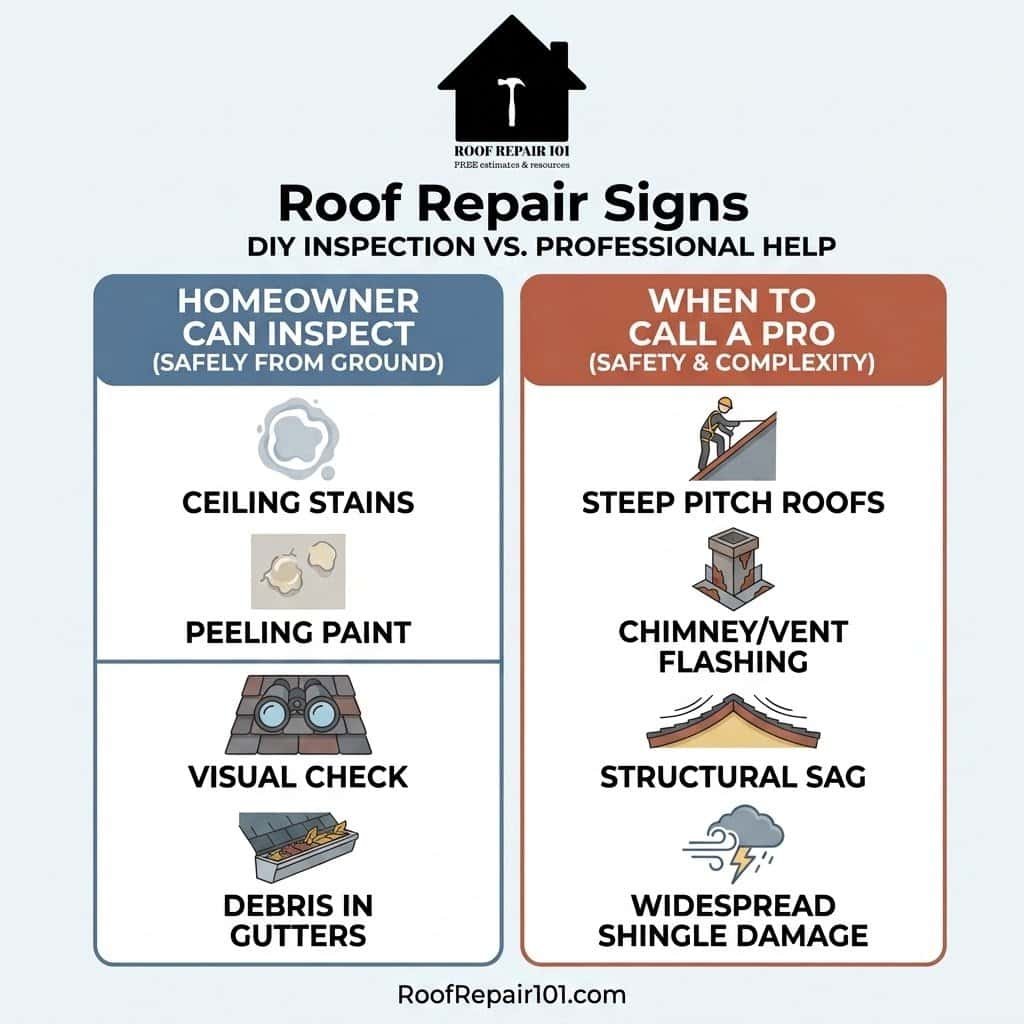
Working on a roof pitch involves significant safety risks and technical execution requirements. While minor sealant fixes on ground-accessible flat surfaces are straightforward, most structural water-shedding repairs demand a licensed contractor.
DIY vs. Professional Action Thresholds
- DIY Permissible: Replacing a single exposed rubber pipe boot collar on a low-slope pitch (<4/12 pitch) using proper OSHA-compliant fall protection.
- Professional Mandate: Any work involving step flashing integration, chimney crickets, valley restoration, structural deck replacement, or pitches exceeding 6/12.
Critical Structural Red Flags Requiring Immediate Professional Repair
- Rafter/Truss Sagging: Visible dipping along the ridge line or eave overhangs, indicating load-bearing timber failure or chronic moisture saturation.
- Widespread Deck Delamination: Spongy feel underfoot across large sections of the roof, signalling widespread rot of plywood/OSB sheathing.
- Severe Ice Dam Backups: Chronic winter leakage along exterior wall top plates caused by improper attic ventilation and missing ice-and-water shields.
Before signing off on work, ensure your contractor carries comprehensive general liability insurance and workers’ compensation coverage. Reviewing thorough roof repair estimates from licensed, insured contractors protects homeowners from personal liability in the event of job-site accidents or structural damage.
Preventative Maintenance & Longevity Tips
Extending the service life of your roofing system after a repair requires a strict seasonal maintenance schedule to prevent water intrusion.
- Spring Inspection (Post-Freeze Reset): Inspect perimeter drip edges for ice-lift damage. Clear all gutters and downspouts of debris to ensure unrestricted water flow away from fascia boards.
- Late Summer Check (Pre-Storm Prep): Check ridge caps and vent flashing seals for UV degradation, cracking, or sealant separation caused by thermal expansion.
- Autumn Maintenance (Debris Removal): Remove leaf pack and pine needles from roof valleys, dormer intersections, and gutter troughs to stop organic rot and standing water pools.
- Attic Airflow Audit: Ensure soffit vents remain unobstructed by insulation to maintain continuous airflow, reducing attic heat build-up and preventing premature shingle degradation.
Roof Repair Estimate Frequently Asked Questions
How much should a realistic roof repair estimate cost?
Most reputable roofing contractors offer initial site estimates for free or charge a modest diagnostic fee ($100–$250) that is credited toward the total repair cost. Minor repairs generally range from $300 to $1,000, while major structural leak fixes exceed $3,000.
Why do estimates for the same leak vary so wildly between contractors?
Discrepancies usually stem from differing scopes of work. A lowbid quote may simply apply topical caulk over damaged flashing, whereas a comprehensive proposal covers tearing down to the decking, replacing underlayment, and installing new custom-bent flashing.
What building codes apply to standard residential roof repairs?
Residential repairs are governed by the International Residential Code (IRC Chapter 9). Key mandates include installing ice-and-water shields in freezing climates, applying drip edges along eaves and rakes, and replacing structural decking that no longer holds fasteners securely.
How do I verify if my contractor’s estimate includes a real warranty?
Ensure the estimate explicitly separates the manufacturer’s material warranty from the contractor’s workmanship warranty. Workmanship coverage should be documented in writing, detailing coverage terms (typically 1 to 10 years) for installation execution.
Table of Contents
National Roofing Contractors Association (NRCA) Technical Manuals: https://www.nrca.net/technical
International Residential Code (IRC) Chapter 9 (Roof Assemblies): https://codes.iccsafe.org/content/IRC2024P1/chapter-9-roof-assemblies
OSHA Fall Protection Standards (29 CFR 1926.501): https://www.osha.g/laws-regs/regulations/standardnumber/1926/1926.501
ASTM International Standards for Roofing Materials: https://www.astm.org/products-services/standards-and-publications/standards/roofing-standards.html